
When Death Comes Without Warning: Why Sudden Loss Breaks Something Different
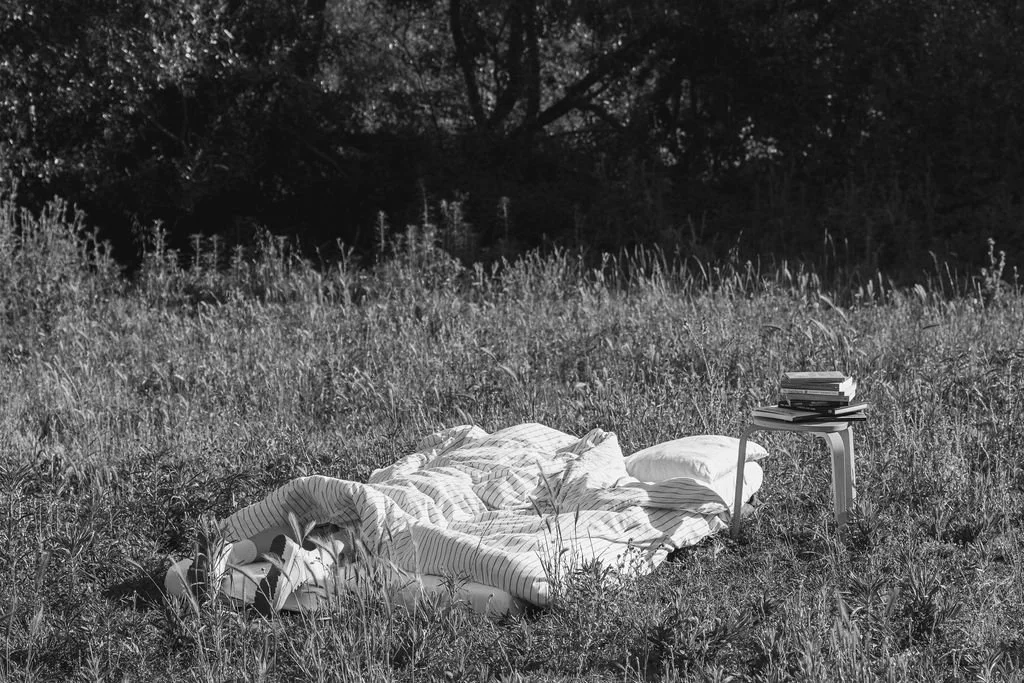
The World You Trusted Is a Story You Told Yourself
Sudden loss creates ripples and ruptures in what we know about safety and permanence. If someone like that can just disappear, is any part of this life certain?
In those moments, our fragility is undeniable. For some, it stirs introspection. For others, it is paralyzing.
There's a reason it feels less like sadness and more like the floor giving out. It is.
What Sudden Death Actually Does to the Nervous System
This isn't just poetic language. There's a name for what breaks.
Psychologist Ronnie Janoff-Bulman called it the assumptive world. The small set of beliefs we don't know we're leaning on until they're gone. That the world is basically benevolent. That events make some kind of sense. That we, personally, are safe enough.
Most people build a life on top of those three assumptions without ever examining them. Sudden death doesn't just take a person - it removes the floor those assumptions were standing on.
That's why sudden loss doesn't behave like other grief. Research consistently finds that unexpected death carries a meaningfully higher risk of prolonged, complicated grief than anticipated loss. Grief that doesn't loosen its grip with time the way we're told it will.
It's not because you're grieving wrong. It's because you didn't get the thing anticipated loss quietly gives people: rehearsal. A chance to start grieving before the death arrives, to say things, to brace.
With sudden loss, none of that happens. The body registers shock and grief at the same time, and it doesn't always know how to tell them apart. That's why sudden loss can carry symptoms that look more like trauma than sadness. A racing mind, a hard time trusting that anyone else is safe either, a body that easily startles.
None of that means something is wrong with you. It means your nervous system is doing exactly what it's built to do when the unthinkable happens with no warning.
Why Sudden Loss Feels Like Trauma, Not Just Grief
The overlap isn't a coincidence. Sudden, unexpected death meets the clinical criteria for a traumatic event, which means two processes end up running at once: the grief of missing someone, and the nervous system's response to a threat it never saw coming.
Ordinary grief tends to move in waves . It rises, it recedes, it leaves room between. Trauma responses don't have that rhythm. They fire without a trigger you can name, at times that make no sense, and they live in the body more than in the mind.
In practice that can look like:
Replaying the moment you found out, involuntarily and on a loop
Intense alarm when someone doesn't answer a text
Trouble sleeping, or waking at the same hour every night
Feeling detached from your own life, as though watching it from outside
Avoiding places, songs, or conversations that bring the death too close
If you recognize several of these, you aren't grieving badly. You're carrying two things at once, and they need different kinds of care.
What You Actually Lose
How someone is grieved is shaped by what they gave. What did this person awaken in me? How did I feel in their presence?
This is known as implicit relational knowing. Our relationships with those closest to us are learned without words and stored as procedural memory rather than as a story we can retrieve. You don't remember acquiring it. You just know how it feels to be around them.
It's built through attunement, the ordinary, repeated experience of being read accurately. Daniel Stern described it as matching not the behaviour but the shape of the feeling underneath it. Enough of that and you get secure attachment:: a working model of what closeness is supposed to feel like, assembled long before you had language for it. A child learns it in the silent gaze of a parent who is paying attention. No words exchanged, and the whole lesson delivered.
That process doesn't stop in childhood. We keep attuning into adulthood, and we keep being shaped by it. Some people make you funnier. Some people make you feel understood. Versions of you that only come into view when someone is reading you closely enough to draw them out.
That's why death is so deeply personal. We lose access to the felt sense of someone. Their energy becomes permanently archived.
How Therapy Helps When There Was No Time to Prepare
Grief therapy for sudden loss doesn't try to rush you toward acceptance. Most of the evidence-based work is quieter than that. It's about giving the nervous system somewhere safe to land, and giving the story somewhere to go.
Rebuilding the assumptive world, slowly. A lot of therapeutic work after sudden loss is less about moving on and more about carefully testing which beliefs about safety, fairness, and control can be rebuilt, and which need to be replaced with something more honest. This is slow work, and it tends to happen in small pieces rather than in a single realization.
Meaning reconstruction. Grief researcher Robert Neimeyer's work centres on helping people re-author their story after loss. Not explaining away the death, but finding where it fits — and doesn't fit — into who you are now. For sudden loss in particular, this often means sitting with the parts that will never make sense, rather than forcing them into a narrative that resolves.
Continuing bonds, not closure. Modern grief therapy has largely moved away from the idea that healing means letting go. Instead, it makes room for an ongoing relationship with the person who died — their voice, their influence, their presence — while you build a life that includes their absence. What changes isn't the size of the relationship. It's where you carry it.
Working with the body, not just the story. Because sudden loss often carries a trauma response, some of the work happens below the level of conversation. Noticing what your body does when the subject comes up. Learning what settles it. Building enough steadiness that the memory can be approached without flooding.
You don't have to pick a lane between the spiritual and the clinical. The research explains why the ground fell out. The rest — the archived love, the door someone quietly opened in you — that part still needs somewhere to be spoken. That's the work.
Next Steps
It's Not Wednesday offers virtual grief therapy for adults living with sudden loss, across BC, Ontario, Manitoba, and Saskatchewan. You don't need to know what to say or where to begin. You just need somewhere to bring it.
Frequently Asked Questions
-
Yes. With sudden loss, the timeline everyone expects you to follow rarely applies.
Because there was no chance to prepare, your mind and body are often still working through the shock of what happened long after everyone else has moved on to just missing the person. The people around you have had months to adjust to a fact you are still absorbing.
If it's been months and it still feels raw, sharp, or disorienting, that's not a sign you're stuck. It's a sign the loss was sudden, and sudden loss takes longer to metabolize.
-
There is no schedule, and anyone who gives you one is guessing.
What research does suggest is that sudden loss tends to follow a longer and less predictable course than anticipated loss, and that the early months often involve as much shock as sorrow. Many people find the second year harder than the first, once the initial numbness lifts and the permanence sets in.
What matters more than duration is direction. Grief that is slowly making room for other things — even while it stays heavy — is moving. Grief that has your life narrowing around it, where you're avoiding more, sleeping less, and withdrawing further as time passes, is worth bringing to someone.